Saturday, 12 October 2013

Pump(kin) it up! Pumpkinfest in Deutschtown

Today was the day of Pumpkinfest, a family-friendly festival held in East Park in the Northside. The event was organized by Citiparks Pittsburgh.

Pumpkins were the main theme, along with many hands-on activities, art and decoration contests, games. But I did see much more than orange veggies. 
That festival was another proof that Pittsburgh is the right place to be now, and will be the best place to be very soon.
The reason why I am saying this is hidden in the following photos, and I will explain it later in the post.

Look carefully at these photos, first: 


To me, the event was very important for many reasons, but the most important is that all the kids –from 1 to 15,16,17… everyone was playing with everyone else. There was no distinction in color or ethnicity: I had the impression the all the world was playing there, at the same time.
I think this is very important because the North Side is certainly not a simple neighborhood, and Pittsburgh itself is not a easy city, in some ways. I keep saying that there are still many things to fix here, but every day spent in Pittsburgh gives me hope for the future.
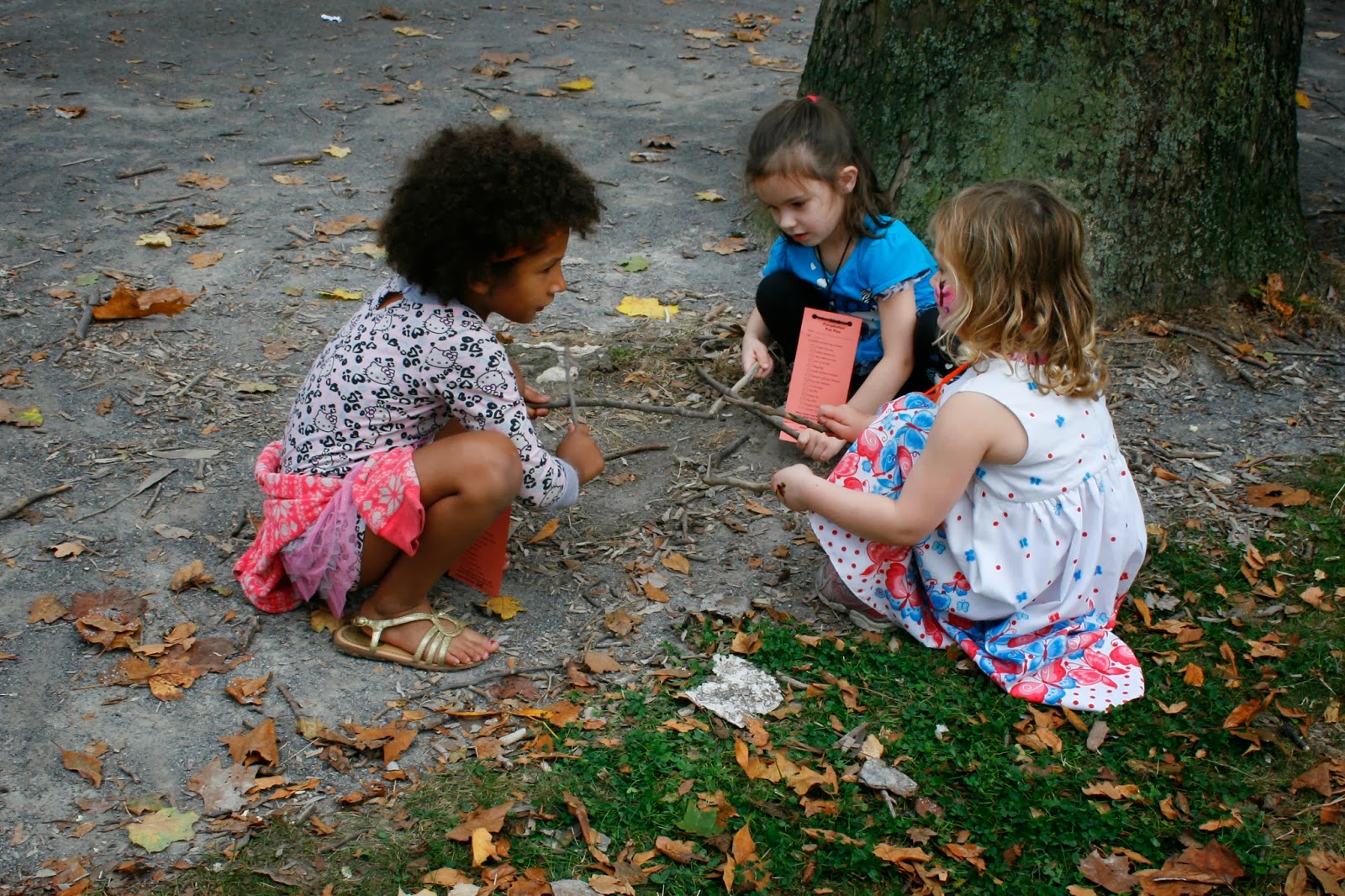
 The kids that in 2013 are playing together at the park, among pumpkins and goats, will be living and working together in 15-20 years from now. It is very likely that they will be doing that in a natural way, with no preconception, sincerely and happily, as they are doing now.

We currently keep seeing segregation in many cities and we read bad stories on the newspapers. This is hideous, but we have to face the problems of our society and try to fix them. Possibly starting from the youngest members because they are the future.
One of the principles of sustainability is to make sure that the next generations will be able to enjoy the same resources we are enjoying now, if not even more. We are responsible NOW for how well the next generations will be living.
We are finally taking care of our environment (even if we could definitely do more) but we should also think that the society as well has to be improved. We must consider how important is to make sure that the next generations will live in a cleaner world, and in a healthier society. To ensure this, we have to act now, with a steady process of raising awareness towards these themes. A city is made of people and places. We must be stewart of the environment AND of our community.

The Pumpkinfest was a great occasion for kids (and adults) to share together spaces and good times. That is a great way to raise awareness on many issues - there was plenty of stands by many community-based associations or groups involved in the care of the environment. 
I was very glad to see so many people and such a successful result. It was possible to play and learn more on many things: even how an ambulance works!
 (the dummy in the ambulance really looks like Silvio Berlusconi!)

I am glad to be in Pittsburgh and I am convinced that this city makes me a better person every day. 
I wish this could keep happening in the future, for an increasing number of people. Pittsburgh is a great lesson of "we can do it". 

So let's get inspired and let's carve our lives beautifully, as we would do with a pumpkin. And, why not, let's even be carved by the very youngest people, which are usually more reasonable than the adults...


Sunday, 22 September 2013

Mivar - an Italian TV manufacturer


Mivar is an Italian tv manufacturer that was very popular in Italy, in the Eighties. Its production was entirely done in a village called Abbiategrasso, in the Milanese area. Mr Carlo Vichi, the owner of the factory and the very designer of every piece (from the logo to the remote control) was able to create an empire by himself. Unfortunately, after some unlucky facts that damaged the brand and the production,  Mivar started to lose money and popularity. The cutthroat competition with the biggest worldwide companies was too much to stand and the little Italian company, which decided to remain 100% Italian, was way less competitive and started to sink slowly but steadily. 
Nevertheless, in 1991, despite uncertainties in the market and before bigger issues to happen in the following years, Mr Carlo Vichi started the construction of a new factory, very close to the old one, on the Naviglio Grande (one of the last artificial canals that run around Milan). 
The new Mivar was supposed to guest 1200 workers (in 2 turns) and the factory was finished with every piece in place, ready to be used. Toilets, lights, systems and computers were ready to start a new production. Which NEVER EVER happened.
The factory remained empty. Not abandoned, but desert.
Mr Carlo Vichi is slowly reducing the production (in the old factory) and nowadays Mivar works 12 hours a week and is producing the last pieces. By the end of the year, everything will be shut down.

My personal interest for the Mivar started more or less 20 years ago. My generation grew up watching tv on "Mivars". The remote controls were unique and the quality of the televisions was great. I was allowed to watch very little tv, as a kid, but Mivar was already a brand in my heart. That was the way I could watch my favorite shows.
Recently, I heard about the factory and thought to learn more about what they are doing now. Unfortunately, I discovered all the things above.
With a friend -fan of Mivar as I am- we called Mr Carlo Vichi and asked if it was possible to have a tour of the factory. He was delighted by our call and he invited us there, whenever we pleased.
A week later, we had the occasion to take an amazing tour of every space and learn everything from this special person. We learned about production, architecture, systems, stories of people and of the brand.

I took some photos during the tour of the new factory. I would like to invite everyone to watch them with care and think about the big possibility was lost there.
Mr Carlo Vichi would like to share his story with all the people which are ready to listen. 
That is an example of Italian excellence that was destroyed piece by piece, even by mean people which took advantage of a man who created an empire on the basis of hard work.


The past of the factory is already written, but the future can be -if not the first one hoped- maybe brighter anyway. It would be nice to think about a new life for the Mivar. I personally have lots of ideas, and I am sure that everyone, once there, will be inspired as well.


Mr Carlo Vichi and I


Monday, 16 September 2013

Porto Poetic - Triennale di Milano


(...) Horizontal volumes from which, with a big effort,
you can spot a detail.
From those volumes, complex protuberances are emerging:
chimneys made bigger by the smoke,
poles, vertical partitions,
tiny units and with different heights which cut out
the lines of the roofs.
Attics, shirts hanging on ropes to get dry,
inclined roofs, cruxes, lights, palms (...) 

This is the city. There are no walls to contain it. 
But electrical cables, and the railway over granitic cubes
are connecting houses and spaces.
Just like a Pointillist painting.

Living in the beauty is necessary.
Recognizing it, not to get lost.
And yet, it remains there
- for the eyes that can see it.

Alvaro Siza on Gabriele Basilico's photograpy


I was in Portugal three times, with only a mission: to search for the Poetry of the so-called School of Porto. Fernando Tavora, Alvaro Siza, Eduardo Souto de Moura are the greatest names of this School, which has no classrooms, but a unique big University: Portugal. If anything, Light, Sky, Nature, Shadows and the City are the Professors. 

There is no need to add drama: what I am saying is just what you can see by visiting the exposition at the Triennale di Milano. "Porto Poetic" is the best place (out of Portugal) to get the idea of what I am talking about.
Apart from the great photos by famous photographers (Basilico among many others, like Chiaramonte, Mimmo Jodice) you'll be able to see technical drawing, video-interviews and wonderful wooden maquettes to explore the projects.


The School of Porto is a great example of care: for the city, for the building itself, for the people that will live in. This care is expressed also in the maniacal attention paid to the details. Even the furniture is been studied with elegance and designed to be integrated with the spaces.

Alvaro Siza always designed wonderful pieces of furniture, playing with elegance (yes, he can).
Clean lines, strong pace, a defined rhythm in every part of the designed body. But you'll remain surprised by the big gap between Siza's sketches (very dramatic and rich of overlapped traces) and his technical drawings. 

Eduardo Souto de Moura's sketches are more geometric and clear, apparently more faithful to the final result. Francesco Dal Co, during the launch of the exhibit, said that this is due because of a different point of view on the world, by the two architects.
Yet, despite the differences in the works (and sketches) of the two architects -which are good friends and worked a lot together- you can always see the Poetry of Porto, emerging.

The School of Porto, with no Manifesto nor dogmas, has always been able to decline different ideas in different ways, on a common ground: the sincerity. This term -sincerity- has been really critical in all the European theory of architecture, so far. We are obsessed with history, truth, purity and sincerity (of architecture). 
The biggest lesson of the School of Porto, by the way, is just this: there are no lectures to attend. Just open your eyes, hears and heart to the city. Sincerity, so intended, is ethically beautiful.
If you want to find the Beauty, just look at the city around you. Listen to it. See it.

Living in the beauty is necessary.
Recognizing it, not to get lost.
And yet, it remains there
- for the eyes that can see it.


Saturday, 14 September 2013

Wonder as an exercise - Triennale di Milano


Space, structure, movement and sound. Push the button and see what happens. At the Triennale di Milano it is now possible to see a special exhibition that collects 150 works by students from the Accademia di Architettura USI, realized between 2010 and 2013 at the atelier of Professor Riccardo Blumer.
The following photos refer to the exploration of the architecture of the movement, or the movement of architecture - as you please. Many other works are displayed, trying to capture the truth of architecture. According to Riccardo Blumer, the truth can be found in the Nature as well in the architecture, since it modifies the Nature. 
Wonder is the best tool to get closer and closer to the truth, exercising our eyes, brains and hearths to perceive the World deeper and more sincerely.

The wooden structure containing the machines

One side of the big wooden structure. All the wooden structures are slowingly moving and creating sound, once you push one of three buttons. 


Friday, 13 September 2013

Souto-sopra, ma Siza soprattutto

This Italian title is just a joke that I cannot directly translate to English.
I am talking about Alvaro Siza and Eduardo Souto de Moura

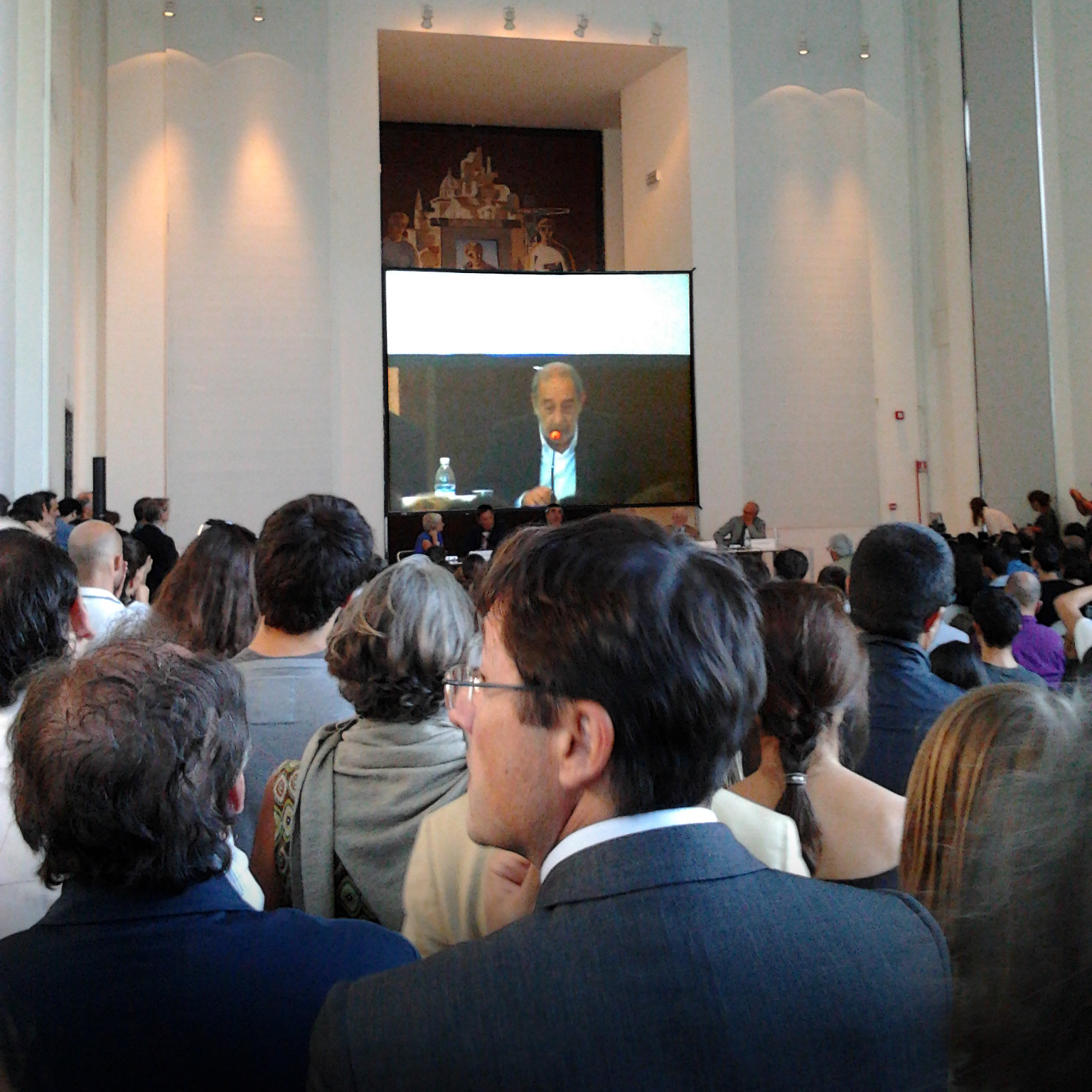
Yesterday I attended a very dense lecture, at the Triennale di Milano, with both of them on the stage, talking to many many people there.
Vittorio Gregotti was there as well, as an architect, writer and critic of architecture, and most of all friend of both Siza and Souto de Moura. 


Multiply those guys by 4.  Then,
 there was the additional room with the projection of the lecture.
It was full also that one.

Despite having to stand all the time, because of the big crowd that flooded the room, I felt very lucky to be in the same room with the two biggest Portuguese architects. 


Their work can be described with these words: a poetry of cement and light.
In fact, that lecture was organized for the opening of Porto Poetic, the newest exhibition at the Triennale di Milano. I'll write about that in few days.

For now, I can leave you with another joke, but for English-speaking architects: 
Super-Siza me!