Showing posts with label BRAINWAVE. Show all posts

Wednesday, 4 December 2013

Think bigger and live smaller: the Tiny Houses Experiment in Garfield

Think of your neighborhood. Think about what is good and bad. Look at the market rates and start figuring out smart ways to invest. Then be awarded with a grant from the Pittsburgh Partnership for Neighborhood Development. Wait a minute, are you living in Garfield? 
I was thrilled to learn about this great idea that CityLab came up with. 
From their website:
<<cityLAB believes that building small houses could make a big impact, and we will begin studying how to bring Tiny Houses to Garfield in late 2013. The idea of Tiny Houses was one outcome of our 2011 6% Place book, which examined how Garfield and Garfield residents could benefit from a systematic effort to grow the neighborhood’s creative capital and attract new residents. cityLAB has recently been awarded a grant by the Pittsburgh Partnership for Neighborhood Development to bring this idea to fruition.>>Thus, a brainstorming session, open to the public, was organized for December 3rd 2013, at the Assemble Gallery. CityLab organized the event as a workshop in which resident in Garfield and anyone interested in tiny houses could express ideas, concerns and desires about the subject.

(above: one of the slides presented at the brainstorming session, on Dec. 3rd 2013)


The workshop, attended by many people (almost too many, for the space, but the theme was really appealing) was divide in three intuitive exercises. In the first, we had to fill a questionnaire, and possibly add comments, regarding the matter of "living small". We where assuming a space which is around or less 1000 SF, but there are no established rules, and very little precedents. We were asked questions regarding which density we would like around us, which public services we would prefer, near our place. But also: need of parking, or shared services, or needs for a vibrant community of other tiny houses vs a in-fill strategy, with our tiny house compressed between existing buildings, way bigger.


The second exercise was more involving. We were given 12 stickers in shape of stars, and a sheet with different possibilities to spend our stars. Many ideas had different "prices", according to the space, the facilities, the things we wanted to put in a house. This was to understand the must of a tiny house, according to us. What you can and cannot renounce to.


The third was definitely hands-on, and it was interesting to see how, despite the big number of participants and the little available space, people really produced great results. We were given scissors, glue, and sheets full of photos. We had to invent a sort of article for a magazine, imagining that our tiny house should have been the cover story of that. We had to come up with a title, tag line and lede (great word find out by Dutch MacDonald, from MAYA design, who was leading the experiment and workshop). Then, we had to select our photos according to the things or features we would like to see in our tiny house. This was a great way to collect data, involving people in finding and expressing their ideas.


Dutch, leading the workshop, from the top of a ladder!

The workshop was absolutely flexible and open to changes. It was really an experiment, brilliantly conducted by Dutch and the CityLab crew. People expressed their availability in DYI, or their concern about money, environmental issues. No one was an expert, but interesting points were brought to the table: economics, society, and physical environment were themes deeply discussed.I was so glad I attended it. And now I can't wait what's next. Everybody will be very excited about learning more, most of all the organizers of the event - that really want to test the field and see "what's the weather like" over Tiny Houses in Garfield.To me, more than learning more about the Tiny Houses Movement, the event was also a great lesson on how to involve people, and how to collect meaningful data. It was really entertaining, but full of information. I am sure we'll hear again about this project. I will follow them again, and will keep you posted.


Check their website, to learn more about others Garfield-based projects and experiments!

And here to learn more about the Tiny Houses Movement.


Saturday, 20 July 2013

The Creative Environment - Community Creative School

On July 19th I went again (see also this post) to the Bruno Works to attend another "creative lunch" held by the Community Creative School.
The lecture was about "How to create a Creative Environment" and the presenter was Dutch MacDonald, from MAYA design. 

It was a great lesson on how to empower a space, and Dutch presented the Kiva® MAYA design invented, to let the ideas flowing in a more efficient way. I have rarely seen something that well thought and designed.


Dutch first introduced MAYA design and their approach to the creative process. Their mission is <<taming complexity, with interdisciplinary design and an architectural approach>>.

Given the complexity of the world around us, also in terms of data collection and amount of information available, MAYA tries to develop projects able to provide solutions that connect people, places and technologies.
They also aim to create the best possible environment for people, putting them in the right conditions to work, share and develop their own ideas.
MAYA design particularly cares of transmitting a culture of creativity, culture that is compatible with the most advanced technologies on the market. 
The continuous development of technologies, with the consequent tendency in having more and more staff mono-specialized on single aspect, reveals that we have to improve a cross-disciplines approach. Thus, people need to be put in condition to share their knowledge and ideas, to confront them and to come up with new ones. 
Dutch pointed out that it is difficult to change people's mind/brain, in order to have them becoming more "efficiently creative". Yet, it is possible to work on the environment around them, in order to improve it and shape the space to be more creativity friendly. He quoted the Herb's Simon's Scissors, which is a strong concept to talk about the decision making process.

Kiva®, MAYA's meeting room, is the perfect example of this attempt to transmit culture and improve creativity and the sharing of ideas (also with the clients). 


This incredible space was born from the need to connect:
  • people and teams (with different skills and different ideas)
  • culture (how to stimulate minds and improve interaction?)
  • physical space (able to transmit and share this culture)
Dutch described it a <<machine for innovation>>. The main concept comes from the ancient underground Native American "community" rooms. In MAYA's Kiva® there are no tables, but just a circular space defined by 360° of white boards. On this boards, ideas are drawn or attached with post-its. This approach has a great impact on the traditional group dynamics of problem solving, improving it. Plus, there is a strong relation between the idea and the position in the space of Kiva®.

Drawing is a common language that is understood by everyone, in form of diagrams, images, sketches and so on. A circular space like this, allows also more groups to work at the same time on different projects, casually sharing information and solution to common projects, even if from different projects.
It is a highly stimulating space, both for principal, staff and clients. 

The rest of the MAYA building is very interesting as well, with spaces designed to provide either public or private and semi-private areas. Social spaces, like the cafe, are very important to reduce the stress level and improve creativity. You will also need spaces to physically "make" your ideas, bringing them from the paper to reality, even if just as models.


Dutch gave suggestions about how to create your own stimulating space - the creative environment - by presenting some examples of temporary workshops MAYA organized for universities or other institutions.


I am personally convinced that being creative, nowadays, is getting more and more vital, if we consider the energy issues, the global diminishing of raw materials and the universal increment of prices. 
"Being creative" is no more just for designers or architects: it is for everyone. Creativity can definitely improve everyone's life, and a creative environments can only positively impact on our lives.


Friday, 28 June 2013

12 months in da 'Burgh - PechaKucha Night Pittsburgh vol.15

Yesterday night I attended and presented another PechaKucha Night, in Pittsburgh. It was our 15th edition!
We were at the WYEP Radio, in South Side, and had a lot of fun. 
The quality of the presentations was great: all the presenters spoke about Pittsburgh, or about something PGH-related.
I want to share with you my presentation, about what I learned and discovered spending 12 months in Pittsburgh.


Here we are… In this presentation I'm gonna talk about YOU. I'm going to tell you how I spent 12 months in da burgh, while I was attending an internship in architecture, and -most important- what I learned about PGH and from PGH, in terms of art, architecture, places and the community.

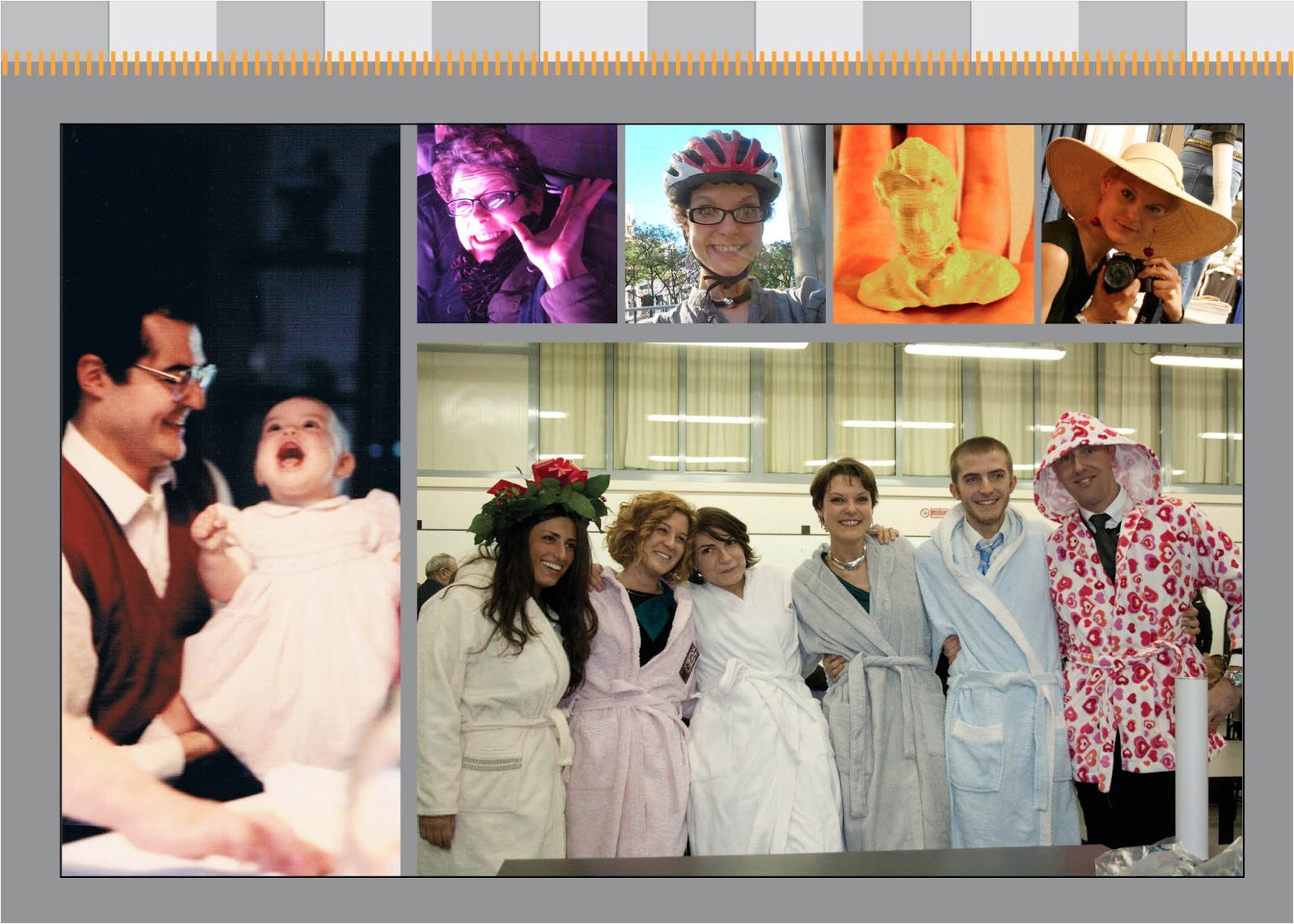
Some of you may already know me, because I am pretty much everywhere, all the time. You can see me in a 4-seasons version, in PGH (on the top) but I was born in Italy, Milan (on the left) where I have a lot of crazy friends. That photo in the right was taken at our graduation ceremony.

When I arrived in PGH, in 2012, it wasn't my first time here. I already knew a little of the city. I knew it was a cool place, trying to re-emerge after the crisis of the steel industry. 
I knew there were a lot of museums and things to do and, to get better prepared, I read a good book which I recommend: The Paris of Appalachian, by Brian O'Neill. 

Nevertheless, when I left Milan, I cried all the flight. Couldn't help!
I was scared to miss my family and friends. Plus... my city, maybe too grey to be put in the number of the italia-must-see. But I love it, even if with all its problems but also its hidden treasures. 

To keep track of my experience, and to stay connected with my Milanese life,  I started a blog called MILANO-PITTSBURGH: it won't be the Marco Polo trip, but i'll do my best for you. 
My friends were fed up with my posts, but it helped me a lot also in preparing this PKN. I am going to present you only the hints for each month.

In  APRIL I loved to go to the North Side, in the Mexican War streets and visit the Mattress Factory. 
I love art and that's a great place, with good exhibitions. I also found this project: google maps agreed to send the google car during a parade. You can see the people celebrating along Samsonia Way, on Street View.

In MAY I really regretted I studied in Italy, instead of at CMU. I studied architecture in Milan, but studying at CMU would have been great anyway.
I love the spaces for the students and the rich variety of architectures, from building to building, which is very inspirational.

In JUNE I was really happy to discover Lawrenceville, with all the fancy shops and boutiques. It somehow reminds me of North Europe, like the historic centers of Amsterdam or Copenhagen  It's really a blast for creativity and start-ups. And you can also develop your own ideas in a number of cafes along butler street.

In JULY I was way less excited of discovering about the problems related to the Marcellus Shale. I am not an activist, but I love the environment and I started reading more about the issue. The documentary GASLAND was really scaring. I would like to invite everybody to keep an eye on what's happening and being aware of the risks.

In AUGUST I could finally see the Batman every Pittsburgher was waiting for. And I had enough knowledge of the city -at that point- that I was able to point out all the buildings pictured. I risked to be thrown out of the theater, but I was very proud of myself. Just a bit disappointed that Mr Nolan destroyed pretty much half of the Burgh, but anyway…

In SEPTEMBER I decided to do something that I've never done before: the Great Race (I'm in the circle). I am still figuring out if I hate more biking or running, but keep fostering both, because they are the best way to discover PGH. I was very excited that day, and very painful for the rest of the week.

In OCTOBER I was blessed with a fantastic win. I've never won anything, not even when my father was trying to let me win, as a kid. In terms of contests or games, I am really "the biggest loser". 
But I did win the Young Architect Studio Competition, for the year 2012.

I proposed to create something special for PGH, that has a great music tradition. I thought to transform the Fort Wayne Bridge (from the David Lawrence Center) in a musical bridge, called "symphony bridge", where people or nature could make music and noise, via instruments hanging everywhere, or just bring their tools.

And suddenly was NOVEMBER, with Thanksgiving (new for me) and the prepping for christmas. I also had the occasion to hear again Vanessa German performing. She is really a great artist, pluri-talented, and also involved in Homewood's "Love the front porch" a project of art for kids.

What I love of Pittsburgh is the people. There are lots of people doing good things for the kids, in problematic neighborhoods. In DECEMBER I attended a show by the Center Of Life in Hazelwood. There were kids from 5 to 19 performing jazz like the masters. Totally amazing!

In JANUARY I had to deal with the snow. But also with great walks in Frick Park, which is wonderful all over the year. Nothing to regret: I believe that PGH is wonderful also under the snow. That allows to discover new perspectives and views even in places you have already visited hundreds of time.

And in case of snow, a visit to the Carnegie is always a nice thing to do. In FEBRUARY, the Heinz Architectural Center organized a big event to celebrate their 20 years anniversary. It was call "Cakeitecture" and this is a cake made into Downtown shape. There were other cakes shaped as other famous buildings. all edible!

In MARCH, with better weather, I spent a lot of time at the cafe 720, on Butler Street, to prepare my second PKN. I presented a guide "how to survive Italians" that was quite fun. I talked about the goods and the bads in italy, but let out Berlusconi which requires a PKN on its own.

And then APRIL was spent pretty much making new friends and discovering the city slower, refining my knowledge of it. This group of kids was just playing in a parking lot, very naturally and simply, and to me they are the symbol of the Burgh: pure enthusiasm even with very little stuff, willing to do better for a larger community.

This is a minimal part of what I learned, discovered and loved of Pittsburgh. There are tons of things that I had to cut here, which are still on my blog (in italian).
I would like to say that this little city or big village -as I say- is a great place to be. It can be tough, but also rewarding. Everybody should be proud to be in Pittsburgh and -even better- to be a Pittsburgher!

Thank you!


Saturday, 15 June 2013

Penn Avenue Art in Motion. Creativity is in the air.

How much creative can creativity be? What can be considered "creative", nowadays?
These are the questions I was asking myself while I was walking along Penn Avenue, between Pacific and Atlantic Street.


A gorgeous and sunny day was the perfect background for this little but dense Festival. Held today from 12 to 6 pm, the Festival was about art and manufactured products. Any support, any color, any material. Useful objects or just treats, but very creative. And here we go back to creativity. 

Creativity comes from the latin "creo", that means "to make". In ancient cultures  creativity wasn't  really "existing", being art supposed to be just a "discover" and, lately in Christian era, divine inspiration. 
In 1926 Graham Wallace, in his Art of Thought, created a model for the creative process. According to him, creativity consists of five steps: preparation, incubation, intimation, illumination and finally verification. Each step is fundamental to reach the final result of creating something that works. Most important: according to him, creativity is part of the evolutionary process of human beings.

My question now is: what is creativity, today? From what I can read and see of the most popular creations of these days, plus considering the evolutionary process and the environmental situation, I do believe that creativity today is no more just "to make" something, but "to change" something. Reciclying  is the new frontier for creativity, with any other way that allows us to save on energy and materials. That would respect Wallace idea of evolutionary process, because it is evident that, right now, our world is shrinking and we are running low in materials and energy sources. Not to consider the problem of waste and garbage.
I love to remember also Bruno Munari definition for creativity: everything that is feasible in a global way, also from a technical point of view. I think that the "global way" he was speaking of is close to the Immanuel Kant dilemma of what is Good. Kant, when in doubt about something, if it was a good or bad thing to do, was asking himself: what if everyone on this Earth is doing this thing; would it be right for the world, or sustainable? Creativity today should keep in mind this, and keep asking the same Kant's question. 

Considering the environmantal challenges we are facing nowadays, I do believe that reuse, recycling and saving energy or materials are today's only possible form of creativity. 
Going back to the Festival, I wanted to show you something really creative, according to the above principles. Maybe these things won't change the world, but the fact that creativity is developing in this way, it's a sign of something changing in our attitudes. Big hope for the future!


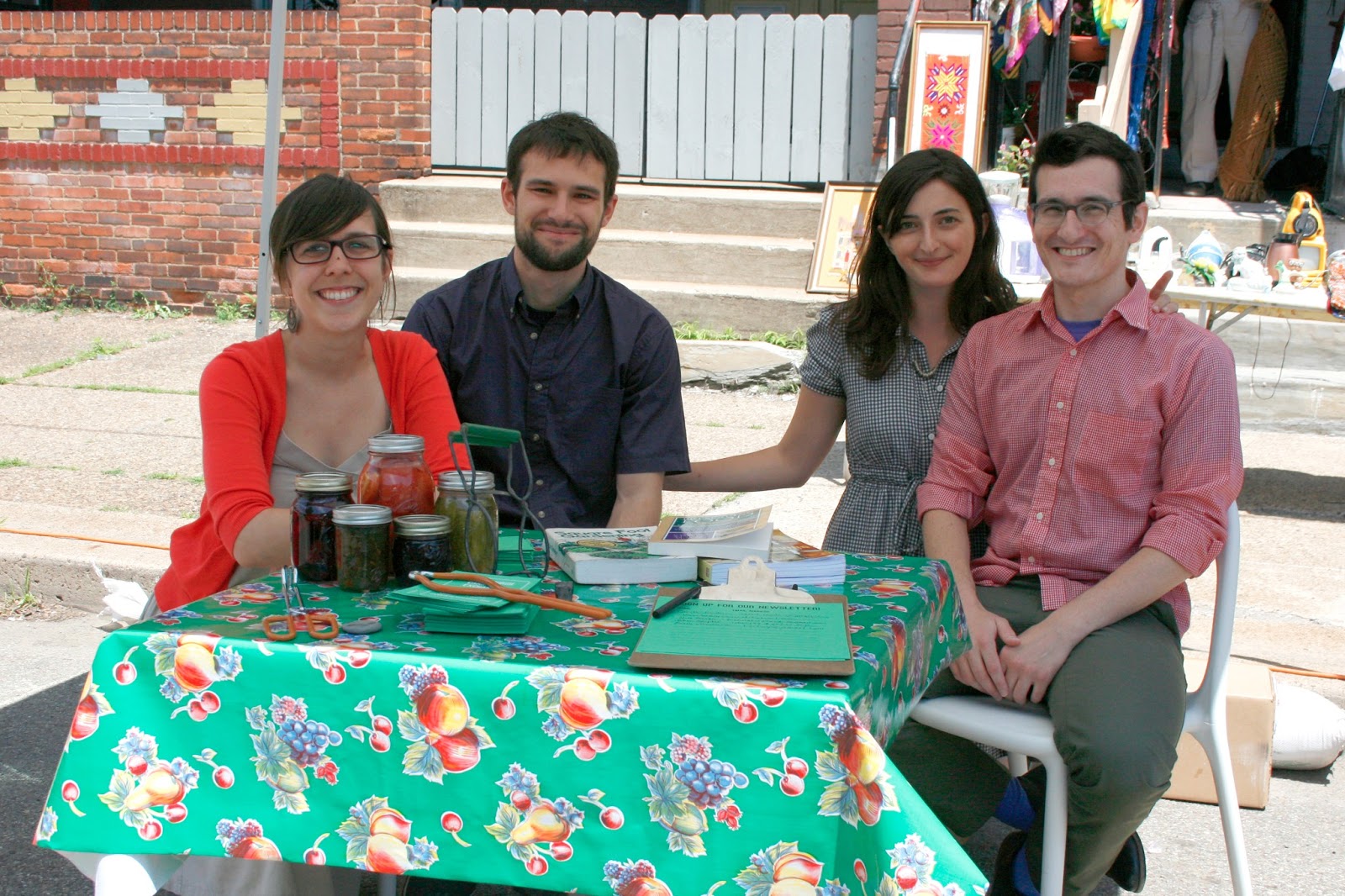
  • Pittsburgh Canning Exchange
These friends want to teach people how to save on food, by preparing your own canning. A second part of the project is to organize parties and events where people can exchange their cannings. 
Learn more on their website http://canningexchange.org/

 Canning team at their stand


  • Stella Divina
By recycling beer labels and working with recyclable materials, S. J. Antonucci is making these nice tiles, to be used as coasters. Her workplace is her kitchen. The tiles come from constructions and demolitions, from all over the world. The cork under the tile is from Portugal, 100% recyclable. The glazing resin is a sustainable one, from an ecofriendly company. Learn more about her project here http://www.stelladivina.com/about.php 


 Cork, cork cork: cork is the word. I said cork, cork, cork...

Honorable mention for the serie of tiles dedicated to Pittsburgh: here, the Civic Arena now demolished.


  • Shernise Alexa
Despite the industry is still playing a lot with plastic, I am personally convinced that glass, a very ecofriendly material, has still a lot to say. A proof is here, with Shernise, that creates also plates for Ikebana compositions. Her vases, twice fired, are given simple shapes, letting the serendipity of the process to do the rest.  You can contact Shernise at Art with Heart (412-441-1029). Her studio is at 4809 Penn Ave, Pittsburgh, PA.


Ikebana, Wabisabi style.


  • Junquey Gal
Recycling fabrics and tissues of any kind, Kelly Crisanti creates romantic bags and clothes. Recycling can be definitely classy. You can find her in Downtown Pittsburgh, at the Boutique208 (208 Sixth Street, Pittsburgh, PA). 
Email address is junqueygal@gmail.com. 
Phone is 412-480-3839


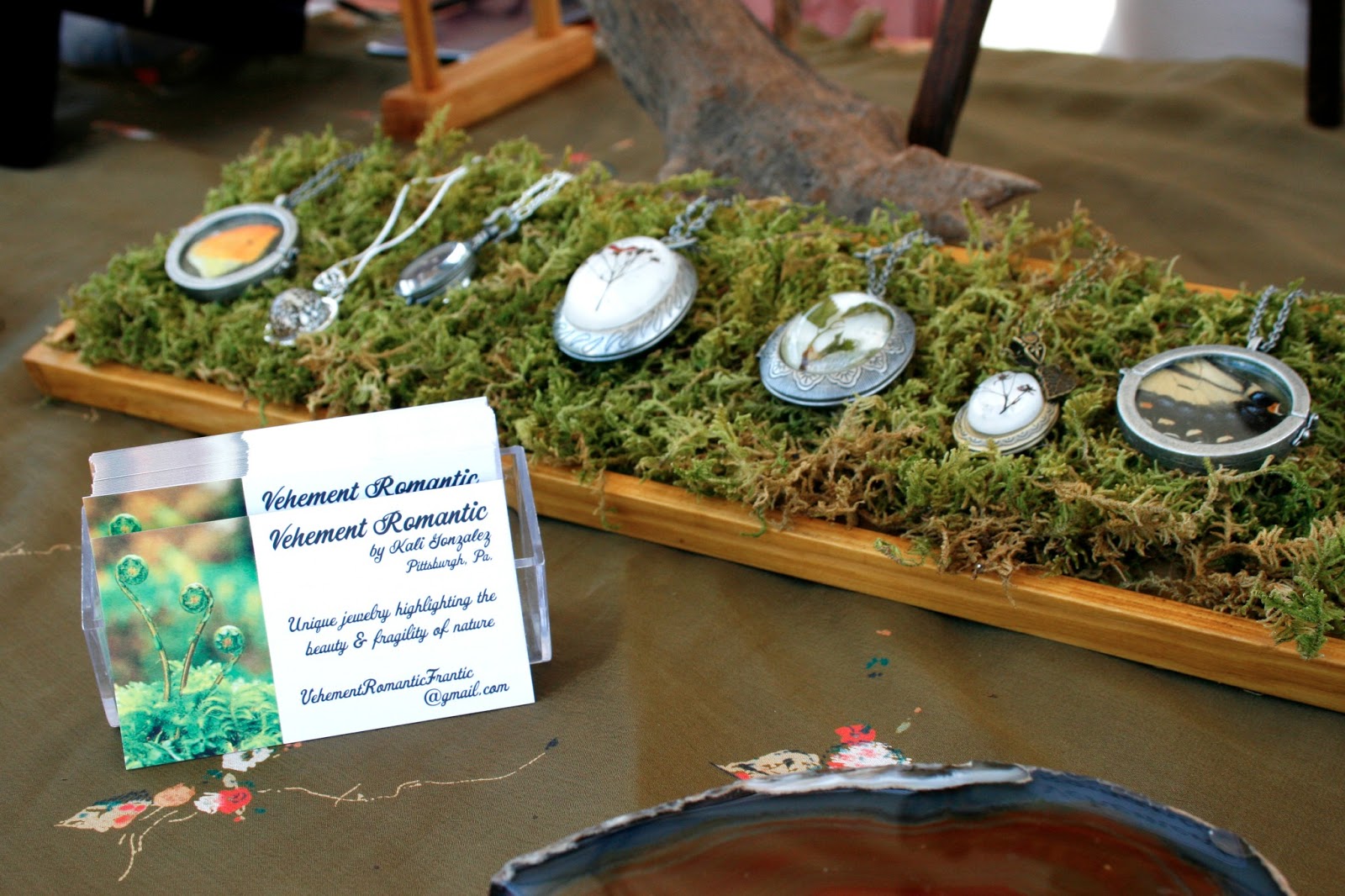
  • Vehement Romantic
No need to spend tons of money on fancy jewels: you can just rely on the beauty of nature and the help of little resin. These jewels are magnificently done, elegant, and are made with very common leaves or small flowers that are growing pretty much freely. The "staff pick" is an amazing dandelion, "caught" in the ripe moment.


Ripe dandelion, alone on the right, on black background. 


  • Pat Knoerdel Gilman
Alternative ways to grow your plants. Use shoes, for example! 
These are some of the creations by Pat. 
You can learn more at pknoerdel@gmail.com or at 724-312-1950


Finally, a quick note on the food stands there. Congrats to NACL Salt of the Earth that was offering free samplings of great chicken liver patè, on crostini, with pickle mulberry. 
I would encourage to have a dinner there, ASAP! They are at 5523 Penn Avenue, Pittsburgh, PA.


Friday, 14 June 2013

New Blog


It's just about what I am currently doing in Pittsburgh, 
with photos (and possibly videos) if time allows it (and a good result). 
I hope that could be inspirational for some.

Please enjoy my new personal project, and as usual: have fun!

Tuesday, 28 May 2013

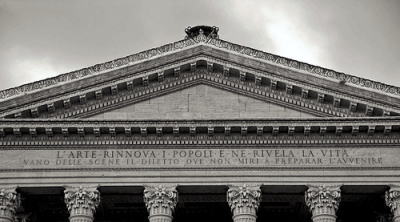
<< L'arte rinnova i popoli e ne rivela la vita >>. Philippe Daverio ce la insegna (l'Arte)


<< Art renews populations, and can disclose their lives >>


This the translation for the quote appearing on the Teatro Massimo Vittorio Emanuele in Palermo, Sicily. Given this task for Art, we now need Philippe Daverio to explain Art to us.

Philippe Daverio is, according to a definition by himself, a jacobin rebel of culture and art, deeply convinced that each population is the product of their own cultural and historical heritage. He is a great lover of Italy, plus being a mix of France, Germany and Italy. Having studied art, history, economics and politics for all his life, he is now in a position of understanding even a complex country like Italy. And he can explain to us Italian why we are as we are.

The easiest definition for him, by the way, is as follows: he is into Art. 
And this should be really intended in a physical way, because he IS indeed INTO Art. He has the ability to see it, understand it as no one else, and then share it with the masses. He is a collector, a show-man, an art merchant, an historian. He is a man of the Renaissance, and every time I listen to him or watch his tv show PasspARTtout I get more and more convinced that we can still give to us Italians another chance. At least from a cultural point of view. Even today.

Last week there was a conference, quite private let's say, in a Milanese school. He talked of Italy and of the current political, social and cultural situation. Take notes during his lectures is rather difficult, because you find yourself in a cultural hurricane of quotes, book, movies, facts. I did my best, totally captured by his charming and funny voice and his brilliance. 

I would like to share with you the most important lesson I learned from the lecture: we Italians need to renew our approach to our artistic heritage.
We must understand it and get convinced that the solution to our current problems is in our roots. We are a mix of populations, that invaded Italy during the centuries and made us so special and different, from mile to mile. Daverio made a comparison between cultura and coltura, that's culture and cultivation. Culture should be cultivated and then harvested, as we do for produce. Of course, cultivating culture in Italy, right now, is really difficult. The dryness of our Institutions and of the majority of people makes it a loosing investment, from the beginning. Indeed, that's the only solution for us. Daverio cannot stand the idea that, in a future, Italy will merely be a cultural amusement park. He would rather destroy everything, instead of seeing us frosted in our artistic heritage, simply getting money from the tourists. 
We do need to cultivate our heritage and keep producing new pieces, to make us again a creative country. 

Thus, he talked about some possible approaches to the cultivation, analyzing approaches from the Illuminism and from the Romanticism. 

<< Art renews populations >> but then we have to give an address to the culture. The Illuminism brought up ideas such as << we will give them not what they want, but what they need >>. Very dangerous approach than led also to Nazism.
Romanticism gave us the idea that << the Man is a god while he is dreaming, but just a miserable when he think about that >> (Friedrich Hölderlin). A partial solution again not correct, since the Man that would stop thinking (to dream) will rarely get good results. 

The solution is going back to the idea of society by Carl Marx, that was intended as family + religion + culture. What we need now is understand our cultural roots: preserving them and then let them flourish again, bringing new life, new culture.
After the terrible mistakes of the Nazism, when culture was used to twist the population and diffuse wrong ideas, institutions like the "Department of Cultural Heritage" have been always seen as a delicate matter, not to be given that much power. But we do need to empower that, giving it a relevant position in our Government, avoiding cuts and creating a Department able to guide an harvesting of our heritage. Finding new thoughts, new arts, new ways to make it worth-preserving: that is up to us. We cannot just leave it there, for the next tourists. We can solve a lot of problems now, by looking back and understanding our history.

Daverio is optimistic because he knows that we are a weird country, but we do know how to metabolize our cultural heritage. We have always found a way to include the old in the new construction. 
E.g Ponte Vecchio ("old bridge") in Florence: instead of being demolished, was enriched with new functions and increments (Vasari, 1565). Paris destroyed a bridge and made the one that is now called Pont Neuf ("new bridge", 1578).

In the recent years, this task of metabolization is getting more difficult and the results less convincing even in Italy. But it's the time to do that again. 
Because we are the Country of the Ponte Vecchio, that thinks of the future.


Wednesday, 22 May 2013

Milan Updates #1


Photo taken at Zara in Corso Vittorio Emanuele, Milano.
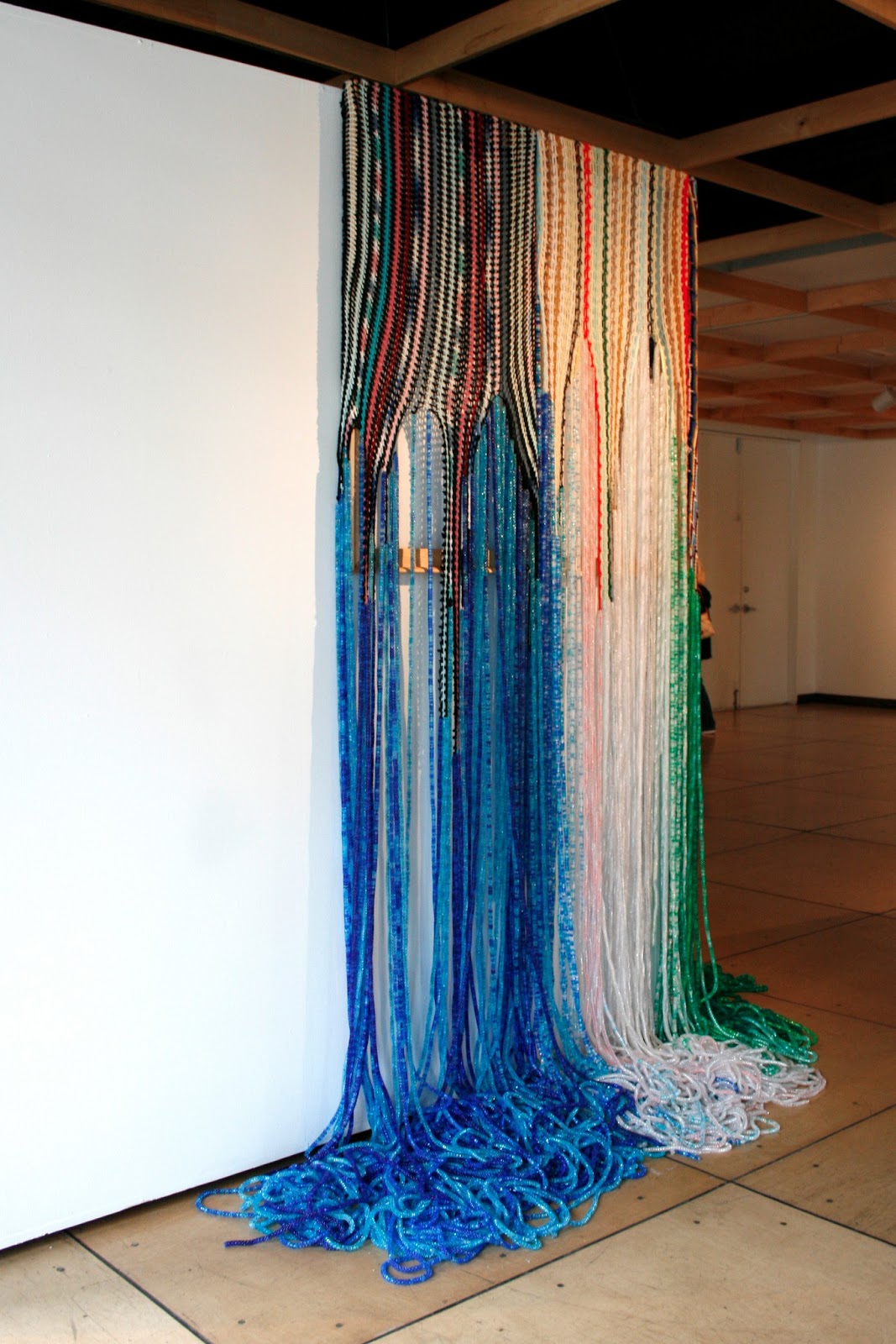
It's a piece made out of plastic, material supposed to live "forever" in the environment.
This could be a problem, when plastic is left as garbage everywhere.
But could be better used to create a piece of art that could live "forever" also in our culture.

Curated by galleria Rossana Orlandi
Installation by Hagar Fletcher 

Tuesday, 7 May 2013

Fiber Art International 2013 - the discovery of the discovery


Today I visited, for the first time and without really planning it, the Society for Contemporary Crafts. I knew there was an exhibition, but what I saw left me totally amazed. From the official website: http://fiberartspgh.org/guild/node/10:

"Fiberart International 2013 is the 21st in a series of triennial juried exhibitions sponsored by the Fiberarts Guild of Pittsburgh, Inc. Chosen by a distinguished panel of artists and curators, Fiberart International 2013 will feature works by established and emerging artists and will provide a unique opportunity to see current trends and innovations in this constantly evolving medium."

I almost felt honored to be able to see that. The pieces are incredibly well done and appealing, in their composition, technique and final result. Each piece, wisely selected by the jury, was the proof of very creative brains linked to astonishingly expert hands.


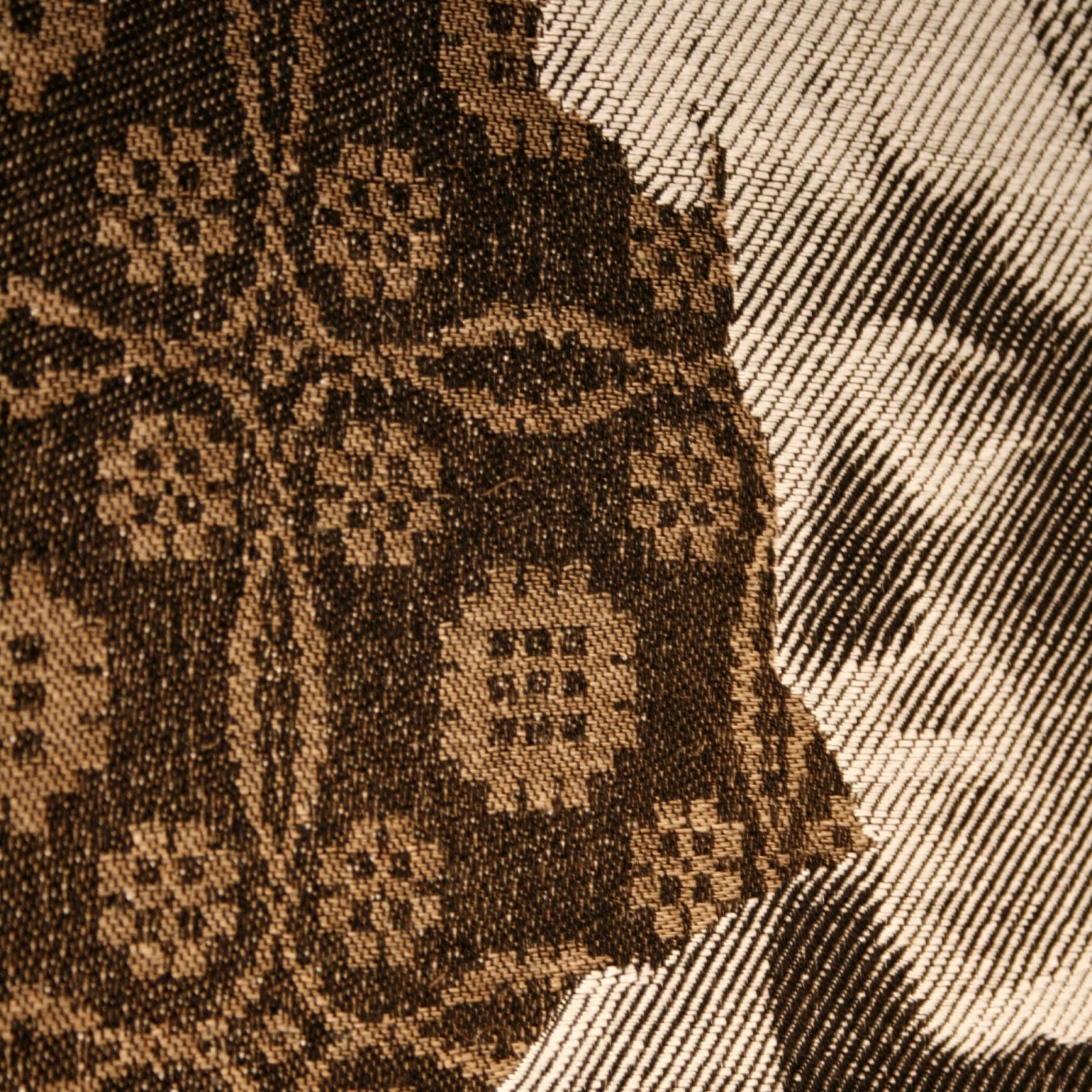
While visiting the space, I was really considering that the most pleasant part of the visit was the discovery of the detail. From far, the compositions were fine, but then, once got closer, the artesanal skills were emerging very clearly.

I usually say that the biggest difference I see between Italy and the US is the density. In Italy, while walking in any city, you can really see the stratification of time everywhere. Houses, streets, gardens: everything is the result of compromises between little available space and strong needs. History shows you overlaid solutions, often resulted from changes of mind. The result, to me, is a kind of magic "fabric", zooming in which you can read another "fabric in the fabric". It's like a big loop of fibers, a never-ending discovery of new details and compositions.

On the contrary, in the US I can see everything clearly, let's say. Everything is displayed in a very impactive way: big, wide, tall, strong. I am still thinking of the cities, for example. What I see, with Italian eyes, seems pretty diluted, in the vastness of the American space.
Pittsburgh still keeps some interesting stratifications, in some parts. I think it depends on the fact that for many years it was almost frosted in the economical crisis. Once people came back, they found big pieces of the past, and started dealing with those, managing to integrate old and new according to their needs.

The complexity of the US in evident when you zoom out. The complexity of Europe and Italy is when you zoom in.

The point here is: contemporary art or the contemporary design is pretty much clean and simplified. Let's just think of the most common objects: I-Phones, I-Pads, trendy ads and websites: there is a tendency in cleaning, whitening, removing, simplifying and smoothing. (Tendency that, I must admit, is not applied to the American food, but this is not a blog about food).

eg. "clean" design

eg. over-enriched food: even the Sushi, in the US, is overloaded with tastes.

This popular inclination to simplify is making everything accessible and easy to use, global and international. Despite the clear perks of such strategies, the danger is to loose our sensitivity and our ability to discern the shades of the world surrounding us. This is a big danger, in my opinion, with the risk of killing creativity.

The satisfaction of seeing an exhibition such the Fiberart International comes from the discovery. I would say: the discovery of the discovery. The aesthetics are pretty modern and contemporary. Bright colors that could come from the latest printers, or designed with the most popular graphic softwares.
The reality is that, once to look closer, you suddenly step back centuries and you can see the human gesture. It is the discovery of the fiber, indeed, and of the artesanal quality of each stitch - in the greatest part of the pieces.

I now let you evaluate by yourself from the photos I took.
But remember that a photo can never substitute a visit in person. If you have the chance, go and (don't) touch with your hand the pleasure of the discovery.


the work of an Argentine artist


rolled papers, patiently clipped together and finely composed.

Hairy rug or undersea world. You choose. 

Tiny embroidery that creates flowers over flowers over flowers...

a curtain that mixes plastics and threads. And colors

like a MirĂ², but it is all sewed

A groundhog by an Italian Artist

This last piece is one of my favorite, by a Japanese artist. I was absolutely convinced it was a precious wood. It is wool and silk and other fabrics mixed together.